Context Layer 設計研究報告與導入 Proposal
SEEKRTECH 公司級 AI-Native Knowledge Management System Date: 2026-03-23 | Author: Rin (for Marcus)
Executive Summary
本報告研究如何為 SEEKRTECH 建立公司級的 Context Layer——一個 AI-native 的知識管理基礎設施,讓 Living Document 持續保持最新、讓 Agent 能在工作流中自動捕捉與更新知識、並基於事件驅動執行任務。
核心建議:採用 Hybrid Architecture(Notion 作為 Human UI + Local Markdown Mirror 作為 Agent Access Layer + Qdrant 作為 Semantic Index),三層分離,各司其職。
Flow Path 視覺化
Flow 1a: 同事透過 Slack 查詢知識
這張圖回答:「同事在 Slack 提問時,資料怎麼流動?」

同事不再需要知道 Notion Page ID,樂芽透過 QMD 語意搜尋自動找到對的文件,從 Local Mirror 讀取,零延遲回覆。
Flow 1b: Slack 對話中的知識捕捉
這張圖回答:「Slack 對話中的新知識怎麼被留住?」
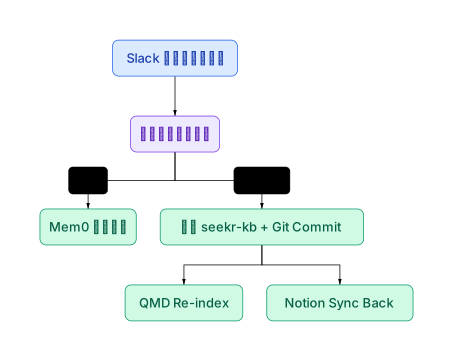
樂芽判斷知識類型:碎片偏好存 Mem0,公司結構化知識寫入 seekr-kb 並自動 Git commit、QMD re-index、Notion sync back。
Flow 2: Notion 編輯自動同步
這張圖回答:「同事在 Notion 修改後,Agent 怎麼看到最新內容?」

同事繼續在 Notion 編輯,Cron 每 4 小時 pull 變更到 Local Mirror,Git commit 留下完整 diff,QMD re-index 後 Agent 即可搜尋最新知識。
Part 1: 現況分析
1.1 SEEKRTECH 目前的知識基礎設施
| 層級 | 工具 | 使用者 | 問題 |
|---|---|---|---|
| 公司知識庫 | Notion | 全員(人工讀寫) | Agent 存取受 API rate limit(3 req/s)限制;所有操作需走 REST API |
| 個人知識庫 | Obsidian Vault | Marcus(Rin 代理) | 僅個人使用,非公司級 |
| 語意搜尋 | QMD(10 collections, ~1800 docs) | Rin Agent | 僅索引 Marcus 的 Vault,不含公司 Notion |
| 對話記憶 | Mem0(Qdrant + Ollama bge-m3) | Rin + 樂芽 | Per-agent collection,跨 agent 不共享 |
| 數據查詢 | BigQuery / Appfigures | 樂芽 Agent(按需) | 即時查詢,非持久化知識 |
1.2 樂芽(Seekr Agent)目前的 Context 讀取方式
樂芽收到問題
  → 檢查 Mem0(自動注入 + 按需查詢)
  → 用 Notion MCP 讀取對應 Page(需知道 Page ID)
  → 用 BigQuery / Appfigures 查即時數據
  → 回覆
痛點:
- Notion API Rate Limit:3 requests/second(所有 plan 一致,讀寫不分),Agent 密集操作時容易撞限
- 無語意搜尋:樂芽只能靠 Page ID 定點讀取 Notion,無法「搜尋」相關知識
- 知識碎片化:公司知識在 Notion、對話記憶在 Mem0、數據在 BigQuery——三者不互通
- 更新靠人工:Notion 文件過時需人工發現、人工更新
- No Event System:知識變更不會觸發下游任務
1.3 已有的強項(可複用)
- QMD:成熟的 hybrid search(BM25 + Vector + Rerank),已有 MCP tools
- Mem0:對話記憶自動捕捉,已有 dedup + cleanup
- Dispatch Pipeline:成熟的 task delegation 架構
- Slack Integration:樂芽已在 Slack,可作為 knowledge capture point
- Cron / Event Hooks:OpenClaw 已有 cron + message hooks 機制
Part 2: Context Engineering 最新研究
2.1 什麼是 Context Layer?
Context Layer 不是單一工具,而是一個設計知識如何流動的系統架構。根據 2025-2026 業界共識:
"Context engineering is the systematic discipline of designing and optimizing how contextual information flows through AI systems — from collection through utilization." — FlowHunt, 2025
"Every AI coding tool can generate code. Very few can generate the right code for your organization — because they're missing context." — QCon London 2026
核心概念:不是讓 AI 讀更多資料,而是讓 AI 在對的時間拿到對的資訊。
2.2 五大 Context Engineering 策略
根據 Anthropic 官方 Context Engineering 指南 及 SwirlAI 2026 State of Context Engineering:
| 策略 | 說明 | SEEKRTECH 對應 |
|---|---|---|
| Write(持久化) | 將關鍵資訊寫到 context window 外部儲存 | Notion pages, Mem0, MEMORY.md |
| Select(檢索) | 只取回當前任務需要的資訊 | QMD semantic search, Notion Page ID |
| Compress(壓縮) | 長對話/大量資料需要摘要壓縮 | Mem0 fact extraction, memory-reflect |
| Isolate(隔離) | 不同任務/Agent 看不同 context scope | Rin vs 樂芽 workspace isolation |
| Progressive Disclosure | 分層載入:discovery -> activation -> execution | .claude/skills/ 分層載入(已實踐) |
Anthropic 2025/12 發布 Progressive Disclosure pattern 後數週內被 OpenAI、Google、Cursor 採用。核心概念:Agent 不需要一開始就看到所有資訊,而是根據任務進展逐步載入更深層的 context。
Gartner 預測:到 2027 年近半數 agentic AI 專案會因「不充分的 context delivery 系統」而被取消。Context Layer 已被視為戰略級基礎建設。
2.3 Manus(AI Agent 公司)的五大實戰教訓
- File System as Extended Memory:Agent 的記憶不該只在 context window 裡,本地檔案系統就是最好的「無限記憶體」
- KV-Cache 優化:system prompt 穩定、context append-only,cached tokens 成本只有 uncached 的 1/10
- Masking > Removal:不要動態移除工具,用 masking 控制可用性(保護 cache hit)
- Attention Manipulation(Living Todo):Agent 自己維護 todo list,避免長任務鏈中目標漂移
- 保留錯誤證據:不要清除失敗紀錄,Agent 會隱式學習
2.4 Google ADK 的 Multi-Agent Context 管理
- Scoped Context Handoff:sub-agent 只收到最小必要 context(非完整對話)
- Artifact Pattern:大型資料(檔案、CSV)用 handle/reference,Agent 只在需要時 load
- Memory Service 雙模式:Reactive(Agent 主動查)+ Proactive(pre-processor 自動注入)
- Context Compaction:長對話自動摘要,保持 context window 清潔
2.5 Notion API 實際限制(深入分析)
| 限制 | 數值 | 影響 |
|---|---|---|
| Rate limit | 3 req/s(per integration, 所有 plan 一致) | Agent 密集操作撞牆 |
| Rich text per object | 2,000 字元 | 長文需拆成多個 block |
| Blocks per request | 100 blocks | 大頁面需多次 API call |
| Nesting depth | 2 levels per request | 深層嵌套需遞迴 fetch |
| Pagination | 100 results per response | 大 workspace 需多次分頁 |
| JSON verbosity | 比 raw markdown 高 3-5x token | Agent context window 浪費 |
實際影響估算:Sync 1,000 個 Notion pages(每頁 10 blocks)= 最少 10,000 API calls = 以 3 req/s 計算需 ~55 分鐘。
研究發現(Arize AI):"LLMs have extensive pretraining on filesystem/bash commands — minimal education tokens needed. The success of file systems as an interface is a symptom of the fact that we are bad at exposing APIs in a useful way."
2.6 業界新興工具值得關注
| 工具 | 特色 | 適用場景 | 成熟度 |
|---|---|---|---|
| Cognee | 開源 knowledge engine,6 階段 pipeline + Memify 自我進化記憶 | 需要 knowledge graph 的進階場景 | 中($7.5M seed) |
| Graphiti/Zep | Temporal knowledge graph,bi-temporal model,20K+ GitHub stars | 需要時間軸推理的記憶 | 高 |
| LanceDB | 嵌入式向量 DB(like SQLite for vectors),4MB RAM idle | 輕量級本地語意搜尋 | 高 |
| Galaxy | Enterprise context management,自動從資料推斷 semantic model | 大型企業統一 context graph | 早期 |
這些工具目前不建議立即引入,但作為 Phase 3+ 的進化方向值得追蹤。特別是 Cognee 的 Memify 模式(ingestion 後持續 prune stale nodes、strengthen frequent connections)和 Graphiti 的 temporal model(追蹤知識的有效時間區間)。
2.7 Event-Driven Multi-Agent 設計模式
Confluent 的研究提出四種 event-driven multi-agent 模式:
| 模式 | 說明 | SEEKRTECH 對應 |
|---|---|---|
| Orchestrator-Worker | 中央排程器分配任務給 worker agents | dispatch-subagent.sh(已有) |
| Hierarchical Agent | 樹狀結構,各層管理 sub-agents | Rin → 樂芽 雙 agent(部分實現) |
| Blackboard | 共享知識空間,所有 agent 讀寫 | seekr-kb 即是此模式 |
| Market-Based | Agent 競標任務 | 未來可考慮 |
Blackboard 模式最適合 Context Layer:所有 Agent 對共享的 seekr-kb 讀寫,curator logic 將碎片整合為結構化知識。這正是本 Proposal 推薦的架構。
Part 3: 架構方案評估
3.1 方案 A:Pure Notion(維持現狀 + 強化)
Notion(SSOT)── Notion MCP ──→ 樂芽/Rin Agent
                                     ↕
                              Mem0(對話記憶)
Pros:
- 零遷移成本,同事繼續用 Notion
- Notion AI 持續進化
Cons:
- 3 req/s rate limit 是硬限制,Agent 密集操作會撞牆
- 無語意搜尋(只能 keyword filter + page ID 定點讀取)
- Agent 每次都要走網路 API,延遲高
- Notion 內容變更無法驅動事件
- 評分:★★☆☆☆
3.2 方案 B:Local-First(全部遷移到 Markdown)
Git Repo(Markdown)── Local FS ──→ Agent
       ↕ sync                        ↕
   Qdrant(Vector Index)      Mem0(對話記憶)
Pros:
- Agent 直接讀本地檔案,零延遲、無 rate limit
- Git 提供完整版本歷史 + diff = 變更事件
- Markdown + frontmatter = 結構化 + 人類可讀
- QMD/Qdrant 語意搜尋直接索引本地檔案
Cons:
- 需全員改用 Markdown 編輯器(高摩擦)
- 失去 Notion 的 database view、formula、relation 等功能
- 同事協作需學 Git
- 評分:★★☆☆☆(技術上最佳但導入阻力太大)
3.3 方案 C:Hybrid(Notion UI + Local Mirror + Semantic Index)⭐ 推薦
┌──────────────────────────────────────────────────────────┐
│                    Human Layer                            │
│   同事 ──→ Notion(讀寫 UI)                              │
│   Marcus ──→ Obsidian Vault(個人知識)                    │
└─────────────┬──────────────────────┬─────────────────────┘
              │ Notion→MD Sync       │ Already exists
              ▼                      ▼
┌──────────────────────────────────────────────────────────┐
│                Local Mirror Layer                         │
│   ~/seekr-kb/                     ~/clawd/vault/          │
│   ├── product/                    ├── 10_Projects/        │
│   │   ├── overview.md             ├── 25_People/          │
│   │   └── metrics-def.md          └── 34_Memo/            │
│   ├── strategy/                                           │
│   │   ├── brand.md                                        │
│   │   └── decision-log.md                                 │
│   ├── team/                                               │
│   │   └── structure.md                                    │
│   └── reports/                                            │
│       └── (agent-generated)                               │
│                                                           │
│   Git tracked → change events                             │
└─────────────┬──────────────────────┬─────────────────────┘
              │ Index                │ Index
              ▼                      ▼
┌──────────────────────────────────────────────────────────┐
│              Semantic Index Layer                          │
│   QMD / Qdrant                                            │
│   ├── seekr-kb collection (公司知識)                       │
│   ├── clawd collection (個人知識)                          │
│   ├── memo, people, meetings...                           │
│   └── Mem0 (對話記憶)                                     │
│                                                           │
│   MCP Tools: qmd_query, search_memories                   │
└─────────────┬────────────────────────────────────────────┘
              │
              ▼
┌──────────────────────────────────────────────────────────┐
│              Agent Layer                                   │
│   樂芽 Agent(Team)                                       │
│   ├── Slack 接收問題                                       │
│   ├── QMD semantic search → 找到相關知識                   │
│   ├── Local FS read → 讀取完整文件                         │
│   ├── BigQuery/Appfigures → 即時數據                      │
│   └── 回覆 + 更新知識庫                                    │
│                                                           │
│   Rin Agent(Marcus)                                      │
│   └── 同上,加上個人知識管理                                │
└──────────────────────────────────────────────────────────┘
Pros:
- 同事繼續用 Notion,零學習成本
- Agent 讀本地 mirror,無 rate limit、低延遲
- Git diff 提供變更事件(知道什麼改了)
- QMD 統一索引公司 + 個人知識,支援語意搜尋
- Agent 可直接寫入 local mirror → sync 回 Notion(反向更新)
- 增量式導入:先 sync 核心頁面,逐步擴大
Cons:
- 需要維護 Notion↔Local sync pipeline
- Sync 有延遲(可接受,非 real-time critical)
- 需處理 Notion 特有功能(database views, formulas)的降級
評分:★★★★☆
3.4 方案 D:Hybrid + Event-Driven(方案 C 進化版)⭐⭐ 最終推薦
在方案 C 基礎上加入 event-driven 知識捕捉與任務觸發:
┌──────────────────────────────────────────────────────────┐
│                  Event Sources                            │
│   Slack 對話 → 樂芽 capture                               │
│   會議錄音 → PLAUD transcribe → extract                   │
│   Notion edit → webhook/poll → sync                      │
│   Agent task output → auto-update                        │
│   BigQuery insight → report → KB update                  │
└─────────────┬────────────────────────────────────────────┘
              │ Events
              ▼
┌──────────────────────────────────────────────────────────┐
│              Knowledge Router                             │
│                                                           │
│   Event → Classify:                                       │
│   ├── "碎片知識 / 偏好" → Mem0                             │
│   ├── "公司結構化知識" → Update local MD → Git commit       │
│   │                     → Notion sync back                │
│   ├── "數據 insight" → Generate report → local MD          │
│   └── "行動項目" → Linear issue / Reminder                 │
│                                                           │
│   Git commit event → Trigger:                             │
│   ├── QMD re-index (affected collections)                 │
│   ├── Notify relevant stakeholders                        │
│   └── Downstream tasks (if configured)                    │
└──────────────────────────────────────────────────────────┘
這就是你描述的三階段完整實現。
Part 4: 工具選型
4.1 Notion ↔ Local Sync
| 工具 | 方向 | 特點 | 推薦度 |
|---|---|---|---|
| NotionFS | 雙向 | Python, bidirectional sync, conflict resolution, YAML frontmatter | ★★★★☆ |
| notion-to-md | 單向(Notion→MD) | Node.js, 40k+ weekly downloads, 穩定 | ★★★☆☆ |
| go-notion-md-sync | 雙向 | Go, git-like staging, frontmatter | ★★★☆☆ |
| Notion Guardian | 單向(Notion→Git) | GitHub Action, 自動 daily export + git commit | ★★★☆☆ |
| Custom Script | 雙向 | 用 Notion API 客製化,完全控制 | ★★★★★ |
建議:先用 NotionFS 做 PoC,視需求決定是否 fork/自建。
注意事項:
- 所有 sync 工具都受 Notion API 3 req/s 限制
- Notion 的 database relations / rollups / formulas 無法完美轉換為 Markdown
- NotionFS 支援 conflict detection + 3 種 resolution 策略(keep-local / keep-remote / keep-both)
- 自建的好處是完全掌控 sync 邏輯,可以做 incremental sync + change detection
4.2 Semantic Search / Vector Index
| 工具 | 部署 | 特點 | SEEKRTECH 現況 |
|---|---|---|---|
| QMD | Self-hosted | BM25 + Vector + Rerank, MCP tools | ✅ 已在用 |
| Qdrant | Self-hosted | 高效能向量 DB, MCP server 官方支援 | ✅ 已在用(Mem0 backend) |
| Mem0 | Self-hosted | 對話記憶自動捕捉, dedup | ✅ 已在用 |
建議:沿用現有 stack,擴展 QMD 新增 seekr-kb collection 索引公司知識。 不需要引入新工具。
4.3 Event / Workflow Orchestration
| 工具 | 特點 | 適合度 |
|---|---|---|
| Git hooks (post-commit) | 零依賴,detect file changes → trigger | ★★★★★ |
| OpenClaw Cron + Hooks | 已有,可擴展 | ★★★★★ |
| fswatch / chokidar | File system watcher | ★★★☆☆ |
| Temporal.io | 重量級 workflow engine | ★★☆☆☆(過重) |
| Inngest | Event-driven functions | ★★★☆☆(需外部服務) |
建議:用 Git hooks + OpenClaw event hooks,不引入新的 orchestration 層。 現有 dispatch pipeline 已經夠用。
4.4 Knowledge Capture Points
| 來源 | 捕捉方式 | 目標 |
|---|---|---|
| Slack 對話 | 樂芽 Agent 在對話中識別 → Mem0 / local MD | 碎片知識 / 決策紀錄 |
| 會議錄音 | PLAUD → Whisper → LLM extract → local MD | 會議結論、行動項目 |
| Agent 任務輸出 | 分析報告自動寫入 seekr-kb/reports/ | 持久化 insights |
| Notion 手動編輯 | Notion→Local sync 偵測變更 → re-index | 保持同步 |
| BigQuery Insights | Cron → query → detect anomaly → report | 自動洞察 |
Part 5: 分階段導入計畫
Phase 1: Living Knowledge Base(2-3 週)
目標: 建立 Notion ↔ Local Mirror,讓 Agent 能透過語意搜尋存取公司知識
步驟:
-
建立
~/seekr-kb/repository- 結構對應 Notion Company Context
- Git tracked,每次 sync 自動 commit
-
Notion → Local 單向 sync(先單向)
- 用 NotionFS 或 custom script
- Cron 排程:每 4 小時 pull(或 Notion webhook 觸發)
- 只 sync 核心頁面:Product Overview, Metrics Definitions, Brand Strategy, Team Structure, Decision Log
-
QMD 新增
seekr-kbcollection- 索引
~/seekr-kb/目錄 - Daily re-index(加入現有 06:00 cron)
- 索引
-
樂芽 Agent Context 升級
- 回答問題時:先 QMD search
seekr-kbcollection → 再 fallback Notion API - 減少 Notion API 呼叫、增加語意搜尋能力
- 回答問題時:先 QMD search
驗收標準:
- 樂芽能回答「我們的 Brand Strategy 是什麼?」而不需要知道 Page ID
- 同事使用 Notion 編輯,4 小時內 Agent 能看到最新內容
Phase 2: Agent Knowledge Capture(3-4 週)
目標: 讓 Agent 在工作流中自動捕捉知識並更新 Living KB
步驟:
-
Knowledge Router 建置
- 在樂芽的
message:receivedhook 中擴展判斷邏輯 - 碎片知識 → Mem0(已有)
- 結構化知識 → 寫入
seekr-kb/local MD → git commit
- 在樂芽的
-
反向 sync: Local → Notion
- Agent 寫入 local MD 後,push 回 Notion
- 用 NotionFS push 或 Notion API create/update
- 需 conflict resolution 策略(Agent 寫入 = append / 標記 section)
-
會議記錄 → KB 更新 pipeline
- PLAUD transcribe → LLM extract decisions/action items
- 自動更新 Decision Log、相關 Product pages
- 人工審核 gate(Discord/Slack proposal → 確認 → 執行)
-
分析報告持久化
- 樂芽產出的分析報告自動存入
seekr-kb/reports/ - 建立 QMD index → 未來可搜尋歷史分析
- 樂芽產出的分析報告自動存入
驗收標準:
- 會議結論自動出現在 Notion Decision Log
- 樂芽產出的報告可被搜尋到
- 同事在 Slack 提到的產品決策,樂芽能自動記錄
Phase 3: Event-Driven Task Processing(4-6 週)
目標: 基於知識變更事件,自動觸發下游任務
步驟:
-
Git-based Change Detection
- Post-commit hook 分析 diff → 分類變更類型
- 知識更新 → QMD incremental re-index(不等 daily cron)
- 重要變更 → 通知相關人員
-
Anomaly / Insight Detection
- 定期比對 BigQuery 數據 vs KB 中的 metrics targets
- 發現異常 → 自動產出分析 → 更新 KB → 通知
-
Cross-Agent Knowledge Sharing
- Rin 和樂芽共享
seekr-kbQMD collection(唯讀) - 樂芽的 Mem0 collection 包含團隊 context
- Rin 的 Mem0 collection 包含 Marcus 個人 context
- 兩者不混合,但 seekr-kb 是共享知識層
- Rin 和樂芽共享
-
Stakeholder-Aware Routing
- KB 變更時,根據 Team Structure 自動 tag 相關人員
- e.g., Metrics Definition 變更 → 通知 Data team
驗收標準:
- 知識更新後 < 5 分鐘,Agent 能搜尋到最新內容
- 數據異常自動被偵測並通知
- 跨 Agent 能共享公司知識
Part 6: 技術架構詳解
6.1 完整資料流
                        ┌─────────────┐
                        │   Notion    │ ← 同事手動編輯
                        │  (Human UI) │
                        └──────┬──────┘
                               │ Notion API (poll/webhook)
                               │ Rate: 3 req/s (shared)
                               ▼
                    ┌──────────────────────┐
                    │  Notion Sync Service  │
                    │  (Cron every 4h)      │
                    │  notionfs pull/push   │
                    └──────────┬───────────┘
                               │ Write markdown + git commit
                               ▼
┌─────────────┐    ┌──────────────────────┐    ┌─────────────┐
│  Obsidian   │    │    ~/seekr-kb/        │    │   PLAUD     │
│  Vault      │    │    (Git repo)         │    │  Meetings   │
│  (Marcus)   │    │    ├── product/       │    │  Transcripts│
└──────┬──────┘    │    ├── strategy/      │    └──────┬──────┘
       │           │    ├── team/          │           │
       │           │    ├── reports/       │           │ LLM extract
       │           │    └── decisions/     │           │
       │           └──────────┬───────────┘           │
       │                      │                        │
       │     ┌────────────────┼────────────────────────┘
       │     │   Git post-commit hook
       │     │   → detect changes
       │     │   → trigger re-index
       │     ▼
       │  ┌──────────────────────────────┐
       └─→│        QMD Index              │
          │  seekr-kb collection (NEW)    │
          │  clawd collection (existing)  │
          │  memo, people, meetings...    │
          │  + Mem0 (conversation memory) │
          └──────────────┬───────────────┘
                         │ MCP Tools
                         │ qmd_query / search_memories
                         ▼
          ┌──────────────────────────────┐
          │         Agent Layer           │
          │                               │
          │  樂芽 (Slack, Team)           │
          │  ├── QMD search seekr-kb     │
          │  ├── Read local ~/seekr-kb/  │
          │  ├── Write → seekr-kb/       │
          │  │   → git commit            │
          │  │   → Notion sync back      │
          │  └── Mem0 capture            │
          │                               │
          │  Rin (Discord/TG, Marcus)     │
          │  ├── QMD search all          │
          │  ├── Read Vault + seekr-kb   │
          │  └── Mem0 capture            │
          └──────────────────────────────┘
6.2 Notion Sync 設計
# ~/seekr-kb/scripts/notion-sync.sh

# Pull: Notion → Local (Cron every 4h)
notion_pull() {
    cd ~/seekr-kb
    notionfs pull --keep-remote  # Remote wins on conflict

    # Auto-commit changes
    if <span class="wikilink-unresolved"> -n $(git status --porcelain) </span>; then
        git add -A
        git commit -m "sync: Notion → local $(date +%Y-%m-%dT%H:%M)"
        # Post-commit hook triggers QMD re-index
    fi
}

# Push: Local → Notion (triggered by Agent writes)
notion_push() {
    cd ~/seekr-kb
    notionfs push --keep-local  # Local wins (Agent just wrote it)
}
Conflict Resolution 策略:
- Notion pull:
--keep-remote(人工編輯優先) - Agent push:
--keep-local(Agent 剛寫的內容優先) - 衝突時:保留兩個版本,通知 Marcus 決策
6.3 QMD Collection 擴展
// ~/.qmd/config.json 新增 collection
{
  "collections": {
    "seekr-kb": {
      "paths": ["~/seekr-kb/"],
      "exclude": [".git", "scripts/", "*.lock"],
      "description": "SEEKRTECH company knowledge base"
    }
  }
}
6.4 Knowledge Router(樂芽 Hook 擴展)
message:received event
  → 現有 Mem0 capture (unchanged)
  → NEW: Knowledge classification
    → If structured company knowledge detected:
      → Write to ~/seekr-kb/<category>/<topic>.md
      → Git commit with semantic message
      → Trigger Notion push (async)
      → Trigger QMD incremental index
Part 7: 風險與緩解
| 風險 | 嚴重度 | 緩解措施 |
|---|---|---|
| Notion sync 延遲導致 Agent 讀到舊資料 | 中 | 4h sync + Agent 可 fallback Notion API 讀最新 |
| NotionFS 不穩定 / 維護停止 | 中 | 只用 pull 功能(最穩定);備案:自建 Notion API script |
| Agent 自動更新寫壞 KB | 高 | Human-in-the-loop gate:重要更新需確認;Git 可 revert |
| seekr-kb Git repo 越來越大 | 低 | 純 Markdown,增長慢;可定期 archive |
| 公司同事不信任 Agent 更新的內容 | 中 | Phase 2 初期:Agent 更新加 callout 標記;逐步建立信任 |
| Notion 特有功能(database view)無法 sync | 中 | Database 只 sync 內容,view 保留在 Notion;報告用 local |
Part 8: 成本估計
| 項目 | 預估成本 |
|---|---|
| NotionFS sync (Notion API calls, 4h × 6 pages) | ~36 req/day → 遠低於 rate limit |
| QMD incremental index(seekr-kb collection) | 零(self-hosted) |
| Qdrant 儲存增加 | 極小(Markdown embeddings) |
| Agent LLM costs(knowledge classification) | ~$0.02/day(Haiku for classification) |
| 開發時間 | Phase 1: 2-3 週, Phase 2: 3-4 週, Phase 3: 4-6 週 |
Part 9: 與競品方案比較
9.1 vs. Guru / Notion AI / Confluence AI
這些是 SaaS knowledge management 平台,提供 AI 搜尋 + 自動推薦。
- 優點:開箱即用,UI 友好
- 缺點:Agent 無法直接存取(只有 human UI)、無法自訂 event pipeline、vendor lock-in
- 結論:適合「只給人用」的場景,不適合「Agent 也要用」的需求
9.2 vs. LangChain / LlamaIndex RAG Pipeline
這些是開發框架,用來建構 RAG pipeline。
- 優點:靈活、可自訂
- 缺點:需要大量開發、不含 UI、不含 sync
- 結論:我們的方案已經內含 RAG(QMD),不需要另起爐灶
9.3 vs. 全 Notion MCP
直接靠 Notion MCP 做所有事。
- 優點:最簡單
- 缺點:3 req/s rate limit、無語意搜尋、高延遲、無 event system
- 結論:Phase 1 之前的 fallback,但不該是長期方案
Part 10: 決策要點
需要 Marcus 決定的關鍵問題
-
Phase 1 先 sync 哪些 Notion 頁面?
- 建議先 sync AGENTS.md 中列出的 6 個核心 pages
- 需要擴大嗎?(e.g., 所有 wiki pages)
-
seekr-kb repo 放在哪?
- 選項 A:
~/seekr-kb/(獨立 repo,樂芽 workspace 可 mount) - 選項 B:
~/seekr-agent/kb/(放在樂芽 workspace 內) - 建議選 A,獨立性更好
- 選項 A:
-
Agent 自動更新 KB 是否需要人工審核 gate?
- Phase 2 建議:重要頁面(Metrics Def, Product Overview)需審核
- 次要頁面(reports, decision log append)自動執行
-
樂芽的 Docker Sandbox 如何存取 seekr-kb?
- 需要額外的 bind mount(
:rwfor writes, 或:ro+ API gateway)
- 需要額外的 bind mount(
-
Notion Webhook vs Polling?
- Notion 目前沒有原生 webhook for page changes
- 建議用 Cron polling(4h 足夠,未來可縮短到 1h)
Part 11: Agent-to-Agent Protocol 展望
2025-2026 年出現了 Agent 互通標準的整合:
| 協定 | 發起者 | 方向 | 狀態 |
|---|---|---|---|
| MCP | Anthropic (2024/11) | Agent→Tool(垂直) | 已成事實標準,97M+ monthly SDK downloads |
| A2A | Google (2025/04) | Agent→Agent(水平) | 成長中,ACP 已合併入 A2A |
| AAIF | Linux Foundation (2025/12) | 統一治理 MCP + A2A | OpenAI, Anthropic, Google, MS, AWS 共同創立 |
對 SEEKRTECH 的意義:
- 目前 Rin→樂芽 的溝通是透過 dispatch pattern,未來可考慮 A2A 標準化
- MCP 投資(Notion, Linear, Slack, QMD, Mem0)方向正確,已被業界驗證
- seekr-kb 可以透過 QMD MCP server 讓兩個 Agent 共享存取
Sources
Context Engineering
- Anthropic - Effective Context Engineering for AI Agents
- State of Context Engineering in 2026 - SwirlAI
- Context Engineering for AI Agents: Lessons from Building Manus
- Context Engineering: The Definitive 2025 Guide
- QCon London 2026: Context Engineering
- Architecting Efficient Context-Aware Multi-Agent Framework (Google)
- Context Engineering: A Complete Guide 2026
- Progressive Disclosure for AI Agents - Honra
Notion API
- Notion API Request Limits
- Understanding Notion API Rate Limits 2025
- Notion AI Limitations & Best Practices 2025
Local-First Sync Tools
Knowledge Management
- Best MCP Servers for Knowledge Bases 2026
- AI Knowledge Base: The Ultimate Guide 2026 (Guru)
- AI Knowledge Base: Complete Guide 2026 (Slack)
- Qdrant MCP Server
Event-Driven & Multi-Agent
- Confluent: Four Design Patterns for Event-Driven Multi-Agent Systems
- The Future of AI Agents is Event-Driven - Sean Falconer
- Temporal: Orchestrating Ambient Agents
- Inngest: Durable Execution Key to Harnessing AI Agents
Agent Memory Frameworks
- Mem0 Research - 26% Accuracy Boost
- Graphiti - Temporal Knowledge Graph (Zep)
- Cognee - Open Source Knowledge Engine
- 6 Best AI Agent Memory Frameworks 2026
MCP & Agent Protocols
- 2026 MCP Roadmap
- 2026: Enterprise-Ready MCP Adoption
- AI Agent Protocols 2026 Complete Guide
- Agentic Engineering Roadmap 2026